In the moment
CoPilot Triage, Whisper Notes, and Photo-In compound to give a single clinician the leverage of a small team. The visit gets faster, safer, and better-documented at the same time — without adding a single hour of training.
What's next
Five capabilities that move the clinic from "data entry" to "data action" — built for the places where care happens despite the infrastructure.
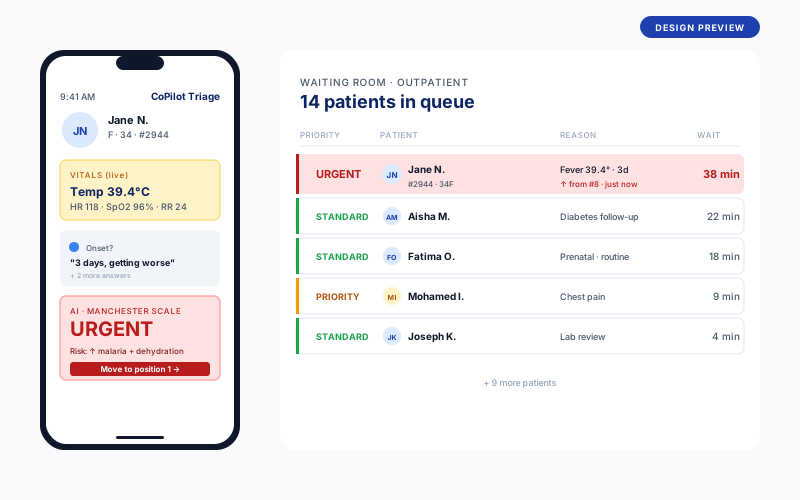
From a 50-deep waiting room to a safe queue — in 30 seconds per patient.
The problem
Fifty patients waiting. Two nurses, one doctor. First-come, first-served is unsafe — the sickest patient might be the one stuck in hour two of the line.
How it works
A nurse walks the queue with a phone. A Bluetooth thermometer captures vitals, the camera captures one photo, and three spoken questions go to a small on-device model. AI applies the Manchester Triage Scale, weighted for the local disease burden — malaria, dengue, cholera. The waiting list reorders in real time, and the most urgent patient surfaces to the top within seconds, not hours.
What makes it different
Existing HBYS products require a manual triage form — minutes per patient, error-prone under load. We're building a voice + photo + AI triage flow that runs on the same phone the nurse already carries.
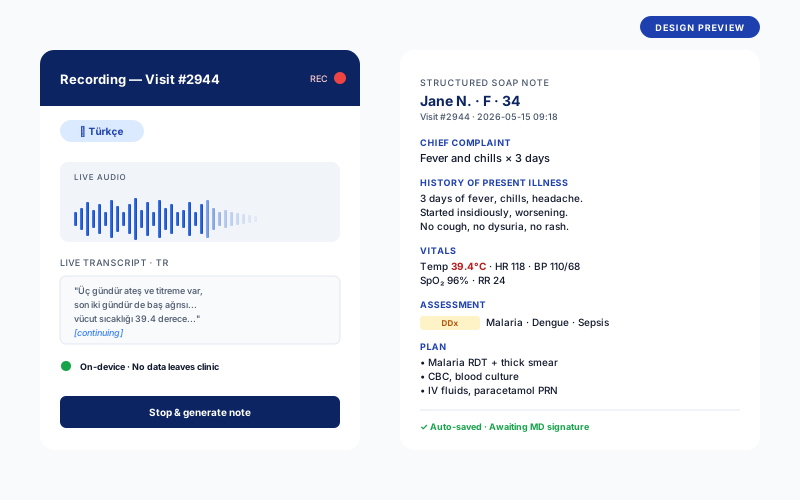
Speak. We write. Five languages, on-device — no patient data leaves the clinic.
The problem
Clinicians lose half of every visit to typing. Eye contact is broken, examination is rushed, and notes stay shallow because there's simply no time to write more.
How it works
The clinician talks to the patient as they always have. The phone listens. Whisper.cpp on-device speech recognition plus a small local LLM transcribe and reshape the conversation into a structured SOAP note — chief complaint, history, examination, assessment, plan. The clinician reviews and signs. Works in Turkish, Arabic, Swahili, French, and English. No cloud round-trip, no PII leaving the building.
What makes it different
Nuance DAX and Suki cost $300 per clinician per month, run in the cloud, and ship English-only. We're building local-first, multilingual ambient documentation that runs on commodity hardware.
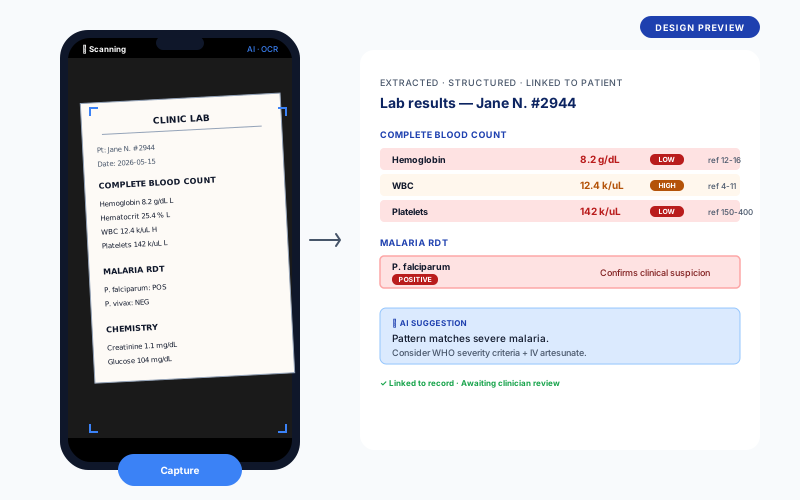
Phone camera + AI = a portable laboratory and a second pair of eyes.
The problem
Lab printouts on paper. X-ray films held up to a window. Skin lesion referrals two hundred kilometres away. Microscope slides without an experienced microscopist on staff.
How it works
Snap a photo of a lab printout — OCR plus an LLM normaliser turn it into structured values in the patient record. Snap an X-ray — a CheXNet-derived screening model flags pneumonia risk and pleural effusion. Snap a skin lesion — a dermatology second-opinion model returns a benign/atypical score. Snap a microscope slide through a five-dollar phone adapter — a vision model counts parasites for malaria, TB, and helminths. Every AI output is the second pair of eyes, never the last word.
What makes it different
Google ARDA and AKi exist as separate services that don't connect to the patient record. We're folding four diagnostic AI assists into one clinical workflow — and all of them can run on-device when the clinic has no internet.
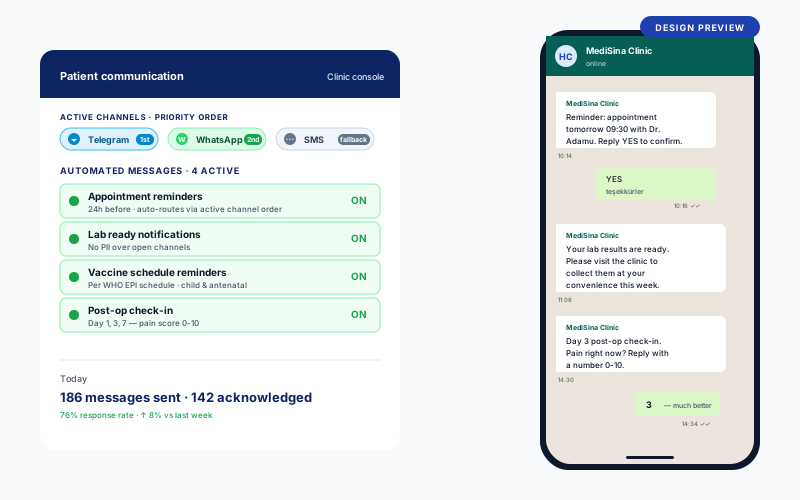
Reach patients on the channels they already use. No app to install, ever.
The problem
Patient apps go uninstalled. Appointment reminders are phone calls one nurse makes between visits. Lab-ready notifications mean another bus ride to the clinic just to ask.
How it works
Telegram Bot API, WhatsApp Business API, and SMS fallback — the clinic picks the channel order per patient or per region. Automated, two-way: 24-hour appointment reminders that patients confirm with a single reply, lab-ready notifications carrying no PII over open channels, prescription pickup reminders, vaccine schedules, post-operative check-ins ("How is the pain on a scale of 0 to 10?"). Replies appear in the patient record as structured updates the clinician can act on.
What makes it different
Epic MyChart and Cerner HealtheLife require app downloads and run English-only by default. We're building patient communication on the channels patients are already on — Telegram, WhatsApp, or plain SMS — in the languages they already speak.
Your clinic, on the public-health radar. The federated sentinel network.
The problem
A single clinic alone can't see a regional outbreak — only national surveillance can, and by then a week or more has passed. Bridging that lag has historically required either expensive central systems or open data sharing that violates patient privacy.
How it works
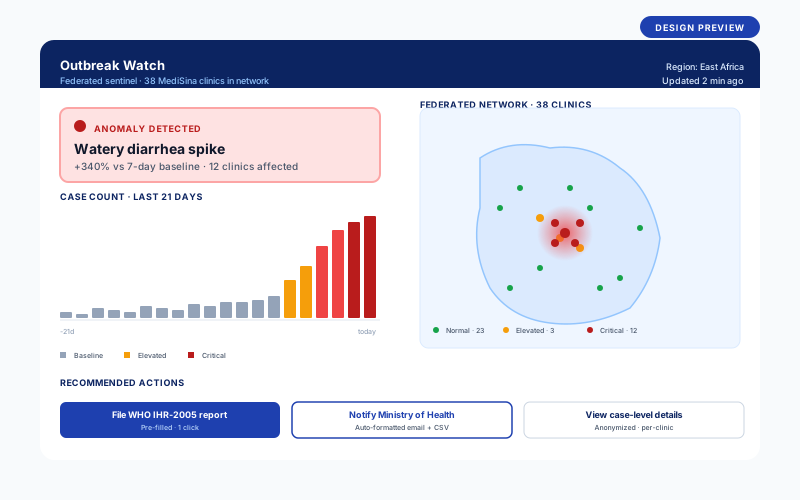
Inside the clinic, Bayesian anomaly detection on diagnosis and symptom counts surfaces alerts in plain English — "watery diarrhea spike: +340% over baseline in the last 7 days." Across opt-in MediSina clinics in a region, federated learning shares privacy-preserving statistical signals — never patient data. WHO and national ministry of health reports are pre-formatted for one-click filing. A red badge appears on the admin dashboard days before the rest of the world knows.
What makes it different
HealthMap and EpiNow exist as standalone surveillance tools that don't talk to the HBYS where the data is born. We're building the first clinic-level sentinel network where outbreak detection is a built-in feature, not a separate service.
Three layers
CoPilot Triage, Whisper Notes, and Photo-In compound to give a single clinician the leverage of a small team. The visit gets faster, safer, and better-documented at the same time — without adding a single hour of training.
Telegram, WhatsApp, and SMS turn the clinic from "come back next week" to "we'll let you know when your lab is ready." Continuity stops being a phone call a tired nurse forgets to make.
Outbreak Watch turns every MediSina-equipped clinic into a sentinel for the region. A disease pattern emerges in the network days before national surveillance picks it up — and the alert reaches the ministry pre-formatted, not pre-buried.
Want to shape this?
Each of these five is a real engineering investment that can be funded as its own program. Hospital partners can pilot a single capability before committing to the full platform. Donors and foundations can sponsor the build of one capability for a specific region or use case. Talk to us — we'll walk through the engineering plan, the pilot path, and the impact metrics.